
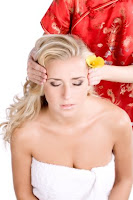
From the mid–twenties onwards, the hair and scalp receives fewer nutrients from the blood, making the hair become weaker, thinner, and more prone to damage. Excessive hair loss can often indicate a problem and should be checked out with your GP. Hormonal changes, especially after the menopause and pregnancy, vitamin deficiency, stress, and illness, can contribute to hair loss as can many other genetic and environmental factors.
Indian Head Massage boosts the flow of blood through the cells in the scalp and head helping to improve hair condition making it stronger, healthier and shinier. It also improves the skin condition on the scalp. A more efficient flow of blood in this area brings more oxygen and other nutrients to the cells and expels any toxins which have built up in them such as carbon dioxide and other waste, helping the cells to function properly and stimulating their growth and renewal. The sebaceous glands are stimulated by the massage helping to normalise their function making the skin and hair soft and supple.
Essential oils can be very beneficial for hair loss as they also have an effect on the sebaceous glands and can be easily incorporated in to an Indian Head Massage. The oils penetrate deeply into the hair shaft and follicle and helps encourage new hair growth. You can mix the essential oils with a carrier oil such as mustard or sesame oil. Massage the oil in to the scalp in a circular motion – do not use too much force if your hair is thinning. Leave the oil on over night if possible and wash hair after as normal. The oil is best applied when warm. Essential oils which are beneficial for hair loss include basil, clary sage, cypress, palmarosa, rosemary, geranium, lavender, Roman chamomile, thyme and cedarwood.
Arnica cream can also be rubbed into areas of thinning hair but should not be used if the skin is broken.


 Posts


